1995 clips prev 1 2 ... 7 8 9 10 11 12 13 14 15 16 ... 99 100 next
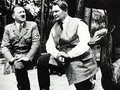

Kesselring and Goering (1999)
Australian aviator and businessman, Sidney Cotton, conned Field Marshall Albert Kesselring into flying his plane over the Rhine so that Cotton could photograph German war installations for British intelligence. Cotton also photographed the country house of Hermann Goering, commander-in-chief of ... [read more]
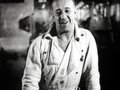
‘Working on the home front’ (1943)
This clip tells the story of a civilian worker who joined the war by helping to make engines and aircraft for the allies. His address to camera – filmed at a workbench against back projection of a factory floor – ... [read more]
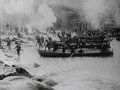
Heroic deeds (1928)
Billy has saved a fellow recruit from drowning, so his commander gives him a reward, a history book Australia and the World War, written by SH Perry. Billy becomes absorbed, reading before lights out in his bunk beside his best ... [read more]

Hurley’s composites (2004)
Photographer Frank Hurley achieved some of his greatest wartime photographs by combining several photos into one. Stephen Burton of the Australian War Memorial shows how it is done. Australia’s official wartime historian, Charles Bean, was outraged. He branded the photographs ... [read more]
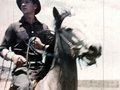
A man from Snowy River (1948)
In this clip, filmed in 1948, a 'man from Snowy River’ swaps his horse and his bushman’s life for a bulldozer and employment on the Snowy Mountains Scheme. While on one level reflecting the technological change affecting the Snowy Mountains ... [read more]

‘The price of profit’ (1953)
This clip argues the dangers of working on the waterfront by highlighting excerpts from the Report on the Medical Examination of Waterside Workers (1945) about high blood pressure, lung disease and hernia. X-rays of workers’ lungs demonstrate a significant incidence ... [read more]
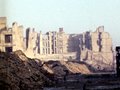
Postwar Berlin (1948)
This clip from a home movie filmed by Australian Prime Minister, Sir Robert Menzies, during a trip through Europe in 1948 shows the destruction that followed the Second World War in Berlin. Piles of rubble stand tall in front of ... [read more]

‘Baffled, dismayed and slow to understand’ (2003)
Many of the soldiers who were now POWs had come out of the Depression and hadn’t had much education. For many of them, Changi became their university. [read more]
Billy Hughes saves a life (1946)
Just after the First World War, Charles Kingsford Smith (Ron Randell) secures the backing of the Blackburn Aviation Co for his entry to the inaugural England to Australia Air Race, but he is dismayed when he meets the Australian Prime ... [read more]
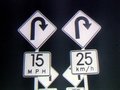
What you need to know (1974)
This is one of the two television advertisements produced to facilitate the change to metric on Australian roads in July 1974. [read more]

‘Australia will be there’ (c1916)
This is a 30-second clip from a simulated recording of Australian troops docking in Egypt after their voyage from Australia to take part in the First World War. They are greeted by jovial ‘Tommies’ and a band that plays 'Advance ... [read more]

‘Go back to Russia’ (1981)
Journalist Wilfred Burchett reported the Vietnam War from the 'other side’. After he lost his passport the Australian Government refused to issue him with a replacement. He is seen at a press conference after he entered Australia with his birth ... [read more]

‘I just didn’t seem to fit in’ (1991)
Vietnam veterans Peter Stainthorpe and Rowan Marsh recall returning to Melbourne after two years of active service in Vietnam. They felt that nothing had changed at home and yet they had changed. They sought out the company of fellow veterans. [read more]
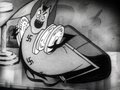
Meet the Squander Bug (1945)
This animated propaganda film from 1945 was used to persuade Australians to invest their savings in the national war chest. The Squander Bug, complete with a large stomach covered in swastikas, is told by Hitler 'Make them waste their money. ... [read more]
A baptism of fire (2006)
Marg’s first placement with Médecins Sans Frontières (Doctors Without Borders) was in South Sudan where a terrible civil war had been raging for over 20 years. She was thrown into the work from the very first moment she arrived at ... [read more]
‘Elephants’ (1979)
Neil Davis talks about working with the South Vietnamese army. He recalls that they were involved in fighting much more than the American forces, and suffered correspondingly higher casualties. The Americans were referred to as 'elephants’ because of their extensive ... [read more]
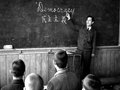
Rehabilitation and re-education (c1948)
This clip begins with a montage of people on the streets of postwar Japan. The narrator explains that the American Allied occupation forces are transforming Japan from a ‘military dictatorship’ into a democracy. The next sequence is about re-education and ... [read more]
Palermo 4, Palermo 5 (2004)
Palermo 4, representing 1939, introduces architecture of the period. Palermo 5, representing 1949, shows the after-effects of war on the city’s architecture. [read more]

‘Hinky pinky parlay-voo’ (1931)
An Australian soldier says goodbye to his French sweetheart (Eugenie Prescott), the beautiful daughter of a local café proprietor, as the troops march up to the lines, singing ‘Mademoiselle from Armentières’, a popular hit of the war. He will never ... [read more]

Nail biting, crime fighting ACTION! (2002)
This is the series theme song from the opening of the episode. It establishes the setting, characters and backstory of the crime wave in Fairytale land which necessitated the arrival of the two outside world detectives – ‘…the heroes of ... [read more]