4177 results prev 1 2 ... 200 201 202 203 204 205 206 207 208 209
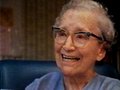

Fear of ageing (1980)
Women, both old and young, attending the International Women’s Day (IWD) march in Sydney in 1980, talk about how they feel about getting old. [read more]
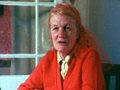
Picketing during the Great Depression (1981)
Timber bosses employed cheap 'scab’ labour to save money. The former employees picketed the mill. Women, led by the Militant Women’s Group (MWG), collected food and money and explained to neighbours the reason for the picket. [read more]
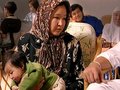
Escaping from the Taliban (2002)
Three Afghans have escaped from the Taliban and arrived in Australia as asylum seekers. They express their views of life in Australia and the reasons for escaping from Afghanistan. [read more]
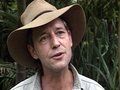
European settlement in Byron Bay (1996)
The first European settlers in Byron Bay cut the 1,000-year-old cedars. They then farmed, and fished out the whales before moving to a more environmentally friendly attitude. [read more]
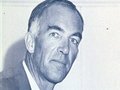
Larry Sitsky comments on the Sydney Opera House (1973)
Composer Larry Sitsky comments that the opera theatre has many faults. Opera director Sam Wanamaker suggests that the space is manageable. [read more]
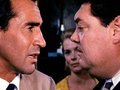
‘Why don’t you go back to your own bloody country’ (1966)
A drunken Anglo-Australian (Keith Petersen) abuses an Italian migrant family on a Sydney ferry. Nino Culotta (Walter Chiari) watches in discomfort. [read more]
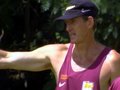
Coming from behind (1999)
In an interview accompanied by photos from his childhood, Wayne Bennett describes how, as a young boy, he made a vow to his mother that he would never drink or gamble. His younger brother Bob describes how he was able ... [read more]
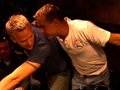
Coming out to the family (1997)
This is a searingly honest moment in which Adam’s parents truthfully tell how they felt when Adam told them he was gay. They had anticipated the continuance of the family name and a mess of grandchildren. Nevertheless they stood by ... [read more]
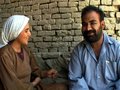
No more pretty shoes (2004)
Shah reveals the irony of having planted landmines as an Afghan soldier then subsequently being the victim of a mine. His wife, Habiba, has lost a leg to a mine and regrets that she can no longer wear pretty shoes. ... [read more]
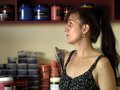
Maps of the country (2000)
Aboriginal paintings feature maps of a specific area, mythology, personal history and storytelling. [read more]
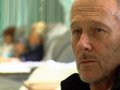
Junk into gold (2003)
Dr Simons and his business partner have patented his discovery that non-coding DNA is vital to our understanding of how disease works. Other medical researchers are outraged that this information – which they say should be freely available – ... [read more]
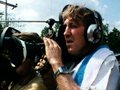
‘Elephants’ (1979)
Neil Davis talks about working with the South Vietnamese army. He recalls that they were involved in fighting much more than the American forces, and suffered correspondingly higher casualties. The Americans were referred to as 'elephants’ because of their extensive ... [read more]
‘Too many pictures’ (1979)
Combat cameraman Neil Davis discusses one of the most memorable images of the Vietnam War, when the national police chief shot dead a Vietnamese suspect. Davis tells the full story of how the prisoner was suspected of killing the police ... [read more]
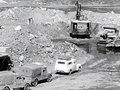
The little town of Katherine (1958)
Charles and Elsa Chauvel have come through the dry outback to camp on a riverbed just outside the little town of Katherine. Elsa gives the viewer a tour through voice-over commenting on shots of the town. [read more]

Doing it tough (1969)
A British immigrant couple talk frankly about how they survive on a single basic wage with three children under five and a mountain of hospital bills to pay. [read more]
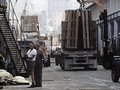
The hungry mile (1976)
Waterside workers are seen on the wharf while the voice-over describes their comfortable work conditions and job security, A montage of historical footage shows a queue of workers in the 1930s, and waterside workers using horses and drays on the ... [read more]
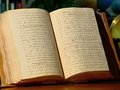
Endeavour journal (2004)
Written on board the Endeavour during his trip down under in 1770, James Cook’s journal records the beginning of Australia as we know it today. [read more]