Titles tagged with ‘propaganda’
39 titles - sorted alphabetically or by year
A
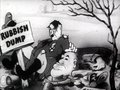

Australians Keep the Wheels of Industry Turning advertisement – c1943
An animated advertisement to persuade Australians to invest in National Savings stamps and the 4th Liberty Loan.
Australia Today – Australia’s 5th Column newsreel – 1941
According to this newsreel, Australia is at war with the '5th Column’, threatened by a ruthless enemy whose objective is the 'downfall of the British Empire’.
B

The Birth of White Australia feature film – 1928
This early feature depicts racial tension in NSW in 1861. Despite its offensive representation of Aboriginality, the film has cultural and historic value.

Browning Machine Gun sponsored film – c1940
An animated army training film that illustrates the operation of the Browning machine gun.
C
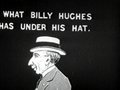
Cartoons of the Moment – Australia’s Prime Minister Delights the Empire newsreel – c1915
In this edition of Cartoons of the Moment, Harry Julius comments on the war in Europe and Prime Minister Hughes’s policy of restrictions on trade with Germany.

Cartoons of the Moment – Crown Prince of Death newsreel – c1915
This First World War anti-German propaganda cartoon represents fighting countries as animals and employs puns in the titles and accompanying captions.

Cartoons of the Moment – German Dove of Peace newsreel – 1915
These cartoons also occasionally provided social commentary on domestic issues that did not have to do with the First World War, such as the evolution of the skirt.
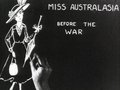
Cartoons of the Moment – Miss Australasia newsreel – c1915
Cartoons of the Moment employs cut-out animation, with two-dimensional character shapes photographed using a stop-motion technique.

Cartoons of the Moment – The Berlin Lokal Anzeiger newsreel – 1915
To emphasise the topicality of his work, political cartoonist Harry Julius is seen reading a newspaper at his desk before he begins sketching his latest cartoon.
Cartoons of the Moment – The Economy in Germany newsreel – c1915
Julius’s propaganda cartoons satirise the qualities of a country and its people by associating characters with specific symbols, items of clothing and facial features.
Cartoons of the Moment – The Kaiser War newsreel – c1918
This edition of Cartoons of the Moment was probably made in 1918, after Prime Minister Hughes’s second visit to England to attend the Imperial War Cabinet.
Cartoons of the Moment – The War Zoo newsreel – c1915
Cartoonist Harry Julius used animals to represent the various countries involved in the First World War, creating easily identifiable – and satirical – character stereotypes.
Cartoons of the Moment – Today the German Monster Threatens the World newsreel – c1916
This powerful piece of anti-German propaganda was a recruitment tool to persuade Australian men of fighting age that their help was urgently needed in the war effort.
E

The Enemy Within feature film – 1918
Snowy Baker stars as a secret agent who smashes a ring of German spies in Sydney during the First World War.

The Exploits of the Emden feature film – 1928
A reconstruction of Ken G Hall’s composite film about the destruction of the German warship Emden in November 1914.
F
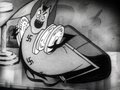
First Victory Home Loan: Squander Bug advertisement – 1945
This ad aimed to persuade Australians to donate money to the war effort, portraying it as patriotic and a show of commitment to the cause.

For the Honour of Australia feature film – 1916
War melodrama about two brothers in 1915: one joins the navy, the other discovers a German spy ring in Australia and is saved after the Sydney batters the Emden.
Four’s a Crowd documentary – 1957
Four’s a Crowd comically portrays four types of workers in the waterfront industry – Glass-arm Harry, Tiddly Pete, Nick-away Ned and Ron the Roaster.
G
Give Us This Day advertisement – 1943
This food rationing advertisement takes its title from a phrase in the Lord’s Prayer ‘give us this day our daily bread’.
H

Hewers of Coal sponsored film – 1957
This union-sponsored documentary dramatises the history of mining in Australia since the early 1900s, including the friction between miners and mine owners.
The Hungry Miles documentary – 1955
The Hungry Miles covers more historical ground than the WWF Film Unit’s earlier works and they regarded it as one of their most significant accomplishments.
K
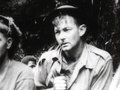
Kokoda Front Line! newsreel – 1942
This iconic and Academy Award-winning newsreel shot by Damien Parer contains some of the most recognised images of Australian troops in the Second World War.
M
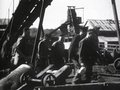
A Mountain Goes to Sea documentary – 1943
Made during the Second World War, A Mountain Goes to Sea was intended as a morale booster for workers building the machinery of war.
N
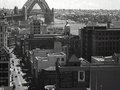
A Nation is Built documentary – 1938
This sprawling and patriotic documentary uses actuality footage, historical re-enactments, fictionalised scenes and propaganda to chronicle Australia’s development and progress as a nation.
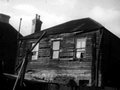
Not Only the Need sponsored film – 1957
This sponsored film made for the Australian Council of Trade Unions argues for the provision of affordable housing to replace inner-city slums.
November Victory documentary – 1955
November Victory was reported by ASIO officials as being a 'scandalously untrue and distorted film version of the 1954 waterfront strike’.
P

Pensions for Veterans documentary – 1953
A first glimpse of the Waterside Workers’ Federation Film Unit’s agenda – to depict labour history from the point of view of the workers.

Poisoned Daggers sponsored film – c1941
The evocative title lends a sense of drama to the message being conveyed: that the mosquito’s bite is a threat not just to the health of the community, but also the war effort.
Power to Win documentary – 1942
Having been determined medically unfit for the army, Charles Chauvel saw his film work as a contribution to the war effort.
Pyongyang Diaries documentary – 1997
Solrun Hoaas uses a diary-like voice-over to reflect on the gap between what she was able to film and what she could not show.
R
The Rats of Tobruk feature film – 1944
The Rats of Tobruk may not be Charles Chauvel’s best movie, but it deserves serious consideration as his best movie about war.

Road to Kokoda newsreel – 1942
What’s remarkable about Damien Parer’s Kokoda footage is that there is no actual combat, and the Japanese presence is felt most keenly through its absence.

Road to Tokyo advertisement – c1941
An animated government advertisement designed to persuade Australians to contribute to the war effort by investing in war loans.
S
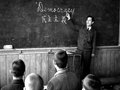
Searchlight on Japan documentary – c1948
Made by Ken G Hall, Searchlight on Japan focuses on Japan under Allied occupation at the end of the Second World War.
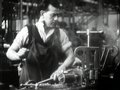
Soldiers Without Uniform documentary – 1942
This propaganda film made by Charles Chauvel aims to boost worker morale by recognising their contributions to the war effort.

South-west Pacific sponsored film – 1943
During the Second World War, Chips Rafferty appeared in two short documentaries made for the federal government to support the domestic war effort.
T

Thanks Girls and Goodbye documentary – 1988
Thanks Girls and Goodbye is not just a 'feel good’ nostalgia film. It explores how the Women’s Land Army was exploited during the Second World War.
W
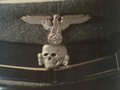
Where Death Wears a Smile documentary – 1985
The little-known story of two Australian soldiers interned in a Nazi concentration camp in Czechoslovakia during the Second World War.
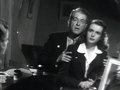
While There is Still Time documentary – 1941
The Chauvels aimed to encourage Australians at home to work to help their loved ones fighting overseas. Future Oscar winner Peter Finch has a small but pivotal role.