All feature films
342 titles - sorted alphabetically or by year prev 1 2 3 4 5 6 7 next
0-9

2000 Weeks 1969
2000 Weeks (1969) was one of the first features of the modern era in Australian cinema. Autobiographical and intensely personal, it’s still highly watchable.

27A 1974
Robert McDarra won the 1974 AFI Award for his portrait of an alcoholic imprisoned in a Queensland psychiatric hospital. He died in 1975.
A
The Adventures of Barry McKenzie 1972
The Adventures of Barry McKenzie was a hugely popular satire with Australian and British audiences, partly because it conformed so well with each country’s view of the other.
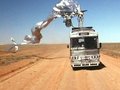
The Adventures of Priscilla, Queen of the Desert 1994
The most unforgettable scenes in Priscilla feature excessive costumes on incongruous characters in vast, humbling spaces.

Against the Grain: More Meat than Wheat 1980
A terrorist visits his family in Western Australia after detonating a bomb in Sydney on Anzac Day.
Alexandra’s Project 2003
If Steve is an average Australian male, his insensitive treatment of his wife is by implication a serious indictment of not only him, but Australian men in general.

Alvin Purple 1973
Alvin Purple was hugely popular, partly because it makes fun of powerful institutions like the courts, the press, marriage and psychiatry.

Amy 1998
Amy has an amazing voice, once she discovers it, making this an unusual combination of sentiment, social commentary and singing.

Angel Baby 1995
These lovers are mentally ill and, for the sake of their coming baby, go off their medication, adding a touch of heroism to the film.

Animal Kingdom 2010
A nervous 17-year-old boy struggles to survive his scary new criminal family after the death of his mother.

Around the World in 80 Ways 1986
Eddie and Wally Davis fake a round-the-world holiday for their senile old father.

Australia 2008
Three outsiders – an aristocrat, a stockman and a vulnerable child – are set against the malevolent forces of greedy neighbours, a world war and assimilationist policy.
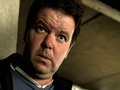
Australian Rules 2002
This drama, with its racism theme, in turn sparked very heated debate about white filmmakers telling stories with Indigenous content.
B

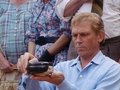
Babe 1995
A worldwide hit film based on a children’s book about a farm pig who wants to be a sheepdog.
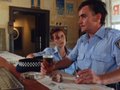
Backlash 1986
Much of the dialogue in Bill Bennett’s film, about two police officers and a young indigenous woman, was improvised on location.

Bad Boy Bubby 1993
Bad Boy Bubby was conceived as an experiment on virtually every level. It had 32 different cinematographers, for example.
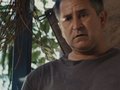
Balibo 2009
In 1975 an Australian journalist travels to East Timor in search of five Australian journalists rumoured to have been murdered by invading Indonesian forces.
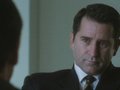
The Bank 2001
A story of the greed and corruption of one banker, The Bank is about the collapse of a sense of compassion in contemporary Australia.
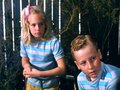
BeDevil 1993
Tracey Moffatt, who is best known as an artist, challenged Western storytelling traditions in Bedevil and polarised critics.

Beneath Clouds 2002
While the narrative devices that director Ivan Sen uses to communicate his themes are firmly located within Indigenous sensibility and cultural perspective, the subject matter is universal.
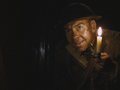
Beneath Hill 60 2010
During the First World War, a Queensland miner learns the true cost of war when he leads Australians in a project to tunnel beneath enemy lines to plant explosives.
The Bet 2006
This tale of corruption and high finance is the first feature directed by Mark Lee, who starred in the iconic film Gallipoli.

The Big Steal 1990
The Big Steal is generally known as a romance and an exuberant comedy but is also about teenagers outwitting corrupt adults.

The Birth of White Australia 1928
This early feature depicts racial tension in NSW in 1861. Despite its offensive representation of Aboriginality, the film has cultural and historic value.
Bitter Springs 1950
A family of white farmers fight to take possession of land and water that is home to a well-established Aboriginal clan.
Black and White 2002
The film presents both the defence’s and the prosecution’s version of what might have happened in the controversial Max Stuart case, so that there is no easy path to the truth.

The Black Balloon 2007
The Black Balloon is partly a coming-of-age movie, but the presence in the family of an autistic brother like Charlie prevents it from becoming conventional or predictable.
Black Robe 1991
In 17th century Canada a Jesuit missionary confronts his faith and mortality while travelling up river to reach a settlement of Huron Indians.
Blackrock 1996
Blackrock’s depiction of teenagers letting off steam with sex and drink and rock 'n’ roll is very dynamic because of the fluid camerawork, lively soundtrack and energetic choreography.
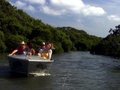
Black Water 2007
An overturned boat leaves three young holidaymakers stranded in the water with only a giant crocodile for company.

Bliss 1985
To say Bliss was ahead of its time is an understatement: the bold metaphors and sharp satire weren’t appreciated by everyone in 1985.
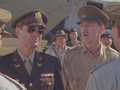
Blood Oath 1990
A fictionalised drama about the true-life struggle to successfully convict Japanese military officers responsible for war crimes in Indonesia during the Second World War.

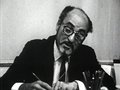
Bonjour Balwyn 1971
Kevin leaves a job in insurance to start his own magazine. As his debts mount, Kevin’s prospects begin to look brighter in the criminal world.

The Book of Revelation 2006
The Book of Revelation is based on a simple, powerful idea: most films about rape are about women as victims of men, so reversing that idea allows men to experience the trauma of violation.

Boxing Day 2007
The unconventional production method helped give Boxing Day an unusually intense sense of foreboding, danger and unpredictability.

The Boys are Back 2009
A successful journalist learns the true meaning of fatherhood and domestic responsibility after losing his wife to cancer.
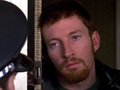
The Boys 1998
David Wenham’s performance as the absolutely terrifying Brett Sprague, launched his career as an actor of serious power and presence.

Bran Nue Dae 2009
An uplifting musical about an Indigenous boy’s journey back home, Bran Nue Dae encourages the audience to relax, get on board and enjoy the ride.
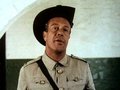
Breaker Morant 1979
Much of the film is about youth versus experience, honesty versus cynicism and political expediency – an interesting ethical domain given that it’s a film about war crimes.
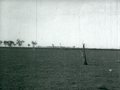
The Breaking of the Drought 1920
An outback family faces ruin through drought and a son corrupted by life in the big city.
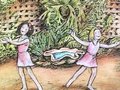
Breathing Under Water 1991
The director’s preoccupation with humankind’s tendency to self-destruct was one factor that lead to the creation of this complex film.

Bright Star 2009
A chronicle of the platonic love affair between poet John Keats and Fanny Brawne in early nineteenth century England.
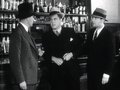
The Broken Melody 1938
A film with music rather than a musical, The Broken Melody is one of the few films of the 1930s that tries to depict the Depression’s effect on real people.
Broken Sun 2008
Imagination and resourcefulness helped this small filmmaking team, lead by Brad Haynes, overcome the constraints of having only $50,000.
Buddies 1983
Buddies is a comedy, dressed up as a frontier romance, and it is relatively unknown and underrated.
Burke & Wills 1985
The epic and tragic story of the first expedition to cross Australia from south to north, in 1860–61.
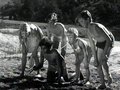
Bush Christmas 1947
In a rare villainous role, Chips Rafferty plays a horse thief, Long Bill. He is tracked by five kids spending Christmas in the Blue Mountains.